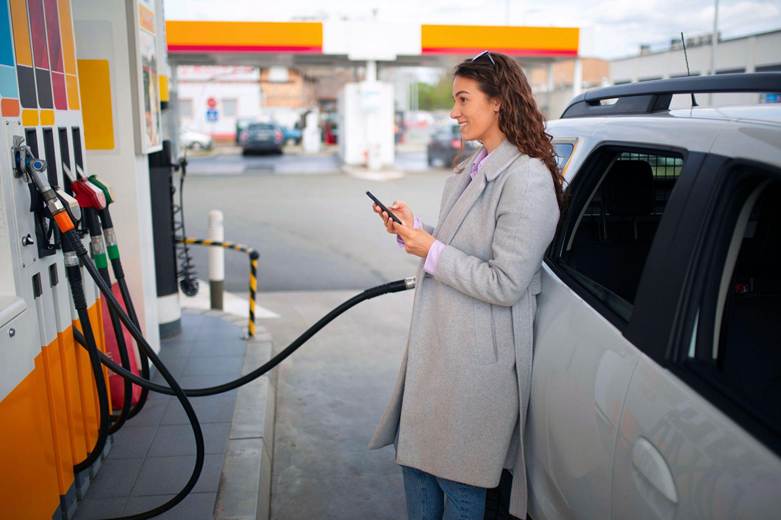
As mobility patterns continue to evolve, Nicholas Kambitsis has increasingly focused on a shift many operators still underestimate: gas stations are no longer functioning solely as fuel destinations. Across suburban corridors, commuter routes, and regional travel networks, these properties are quietly evolving into decentralized service infrastructure.
For decades, gas stations operated within a relatively straightforward business model. Fuel drove traffic, convenience sales supplemented margins, and location determined long-term viability.
That structure is changing.
Modern consumers increasingly expect a single stop to serve multiple purposes simultaneously:
- fueling
- foodservice
- package pickup
- mobile ordering
- digital payments
- quick errand completion
- last-minute household purchases
The modern forecourt is gradually becoming part retail center, part logistics node, and part neighborhood utility hub.
This evolution is happening slowly enough that many operators still frame their businesses through traditional fuel-retail categories. Yet consumer behavior suggests a broader transformation is already underway.
Why Gas Stations Occupy a Unique Position in Consumer Behavior
Unlike destination retail, fuel stations exist inside recurring movement patterns.
Customers encounter these locations during:
- daily commutes
- school transportation routes
- business travel
- highway movement
- routine errands
- transitional moments between activities
That repeated exposure creates a form of behavioral familiarity few other retail categories possess.
Consumers may visit grocery stores weekly or restaurants occasionally, but gas stations often become embedded in highly repetitive routines. Over time, that consistency creates a subtle layer of trust and psychological dependence.
This positioning gives fuel retailers something increasingly valuable in modern commerce: habitual relevance.
The businesses that exist naturally within daily movement patterns often gain long-term resilience because they require less behavioral disruption from consumers.
The Rise of Distributed Convenience Infrastructure
Many industries are moving toward decentralized service models.
Healthcare is experimenting with neighborhood clinics. Banking shifted toward distributed ATM networks and digital access points.
Retailers adopted pickup lockers, micro-fulfillment hubs, and localized delivery ecosystems. Fuel retail is moving through a similar transition.
Gas stations increasingly function as:
- delivery support locations
- mobile commerce touchpoints
- rapid convenience hubs
- localized logistics centers
- hybrid retail-service environments
This shift is especially important as suburban growth patterns continue to change.
Consumers increasingly prioritize proximity, speed, and consolidation of errands. Businesses capable of simplifying fragmented routines become more deeply integrated into everyday life.
The gas station industry is uniquely positioned to benefit from this behavioral shift because of its geographic accessibility.
Why Convenience Is Becoming an Infrastructure Asset
Traditionally, infrastructure referred to systems such as:
- roads
- bridges
- utilities
- transportation networks
But consumer infrastructure is evolving.
Increasingly, infrastructure also includes businesses that reduce friction in daily movement.
Convenience itself is becoming a form of economic utility.
Locations that simplify:
- time management
- mobility
- errands
- food access
- payment experiences
- delivery coordination
begin functioning as invisible support systems inside local economies.
That reframes how modern gas stations should be understood.
They are no longer merely transactional fuel sites. In many communities, they operate as reliable access points woven into the rhythm of everyday life.
The Delivery Economy Is Quietly Reshaping Forecourt Strategy
One of the most overlooked shifts in fuel retail involves the growth of delivery infrastructure.
Third-party delivery systems have fundamentally altered consumer expectations around speed and accessibility. As e-commerce and rapid delivery continue expanding, strategically located gas stations gain new operational relevance.
Many properties already sit at ideal intersections for:
- short-radius delivery routes
- commuter traffic
- neighborhood accessibility
- extended operating hours
- fast product turnover
That combination creates opportunities beyond traditional fuel economics.
Some operators are beginning to rethink underutilized space through:
- micro-fulfillment integration
- delivery staging areas
- expanded prepared food operations
- curbside pickup systems
- localized inventory distribution
The physical footprint of the station becomes more flexible and economically layered.
Why Smaller Community-Based Operators May Hold an Advantage
Large chains often dominate through scale and standardization. Yet localized operators possess a different advantage: adaptability.
Community-based businesses can often respond more quickly to:
- regional behavior shifts
- local purchasing patterns
- neighborhood partnerships
- demographic changes
- community events
That responsiveness becomes increasingly valuable as retail environments grow more personalized.
Consumers increasingly gravitate toward businesses that feel connected to local rhythms rather than purely standardized corporate systems.
This is particularly relevant in fuel retail because stations often function as recurring touchpoints within community life. Familiarity matters. Predictability matters. Responsiveness matters.
The operators who understand local behavioral patterns tend to build stronger long-term loyalty than businesses relying solely on transactional efficiency.
The Future of Fuel Retail Will Be Defined by Integration
The next phase of convenience retail will likely depend less on singular services and more on ecosystem integration.
Successful locations will increasingly combine:
- mobility support
- digital convenience
- localized retail
- foodservice
- logistics functionality
- behavioral efficiency
The station itself becomes less defined by fuel alone and more defined by utility within everyday movement.
That shift carries broader economic implications.
As urban congestion, delivery demand, and consumer time pressure continue increasing, decentralized service networks will become more valuable. Businesses already positioned along daily mobility corridors hold a structural advantage within that environment.
Fuel retail may ultimately evolve into something larger than its traditional identity.
Not simply a place people stop, But a system quietly supporting how people move, organize time, and navigate modern life.